🌐 Also available in: Español
Original source: Mundo Maldini
This video from Mundo Maldini covered a lot of ground. 3 segments stood out as worth your time. Everything below links directly to the timestamp in the original video.
The decision to return Kimmich to midfield transforms Bayern into something qualitatively different from last season's squad. That single tactical variable explains much of the debate surrounding who leads Europe.
Bayern and PSG Lead European Rankings as Kimmich Returns to Midfield
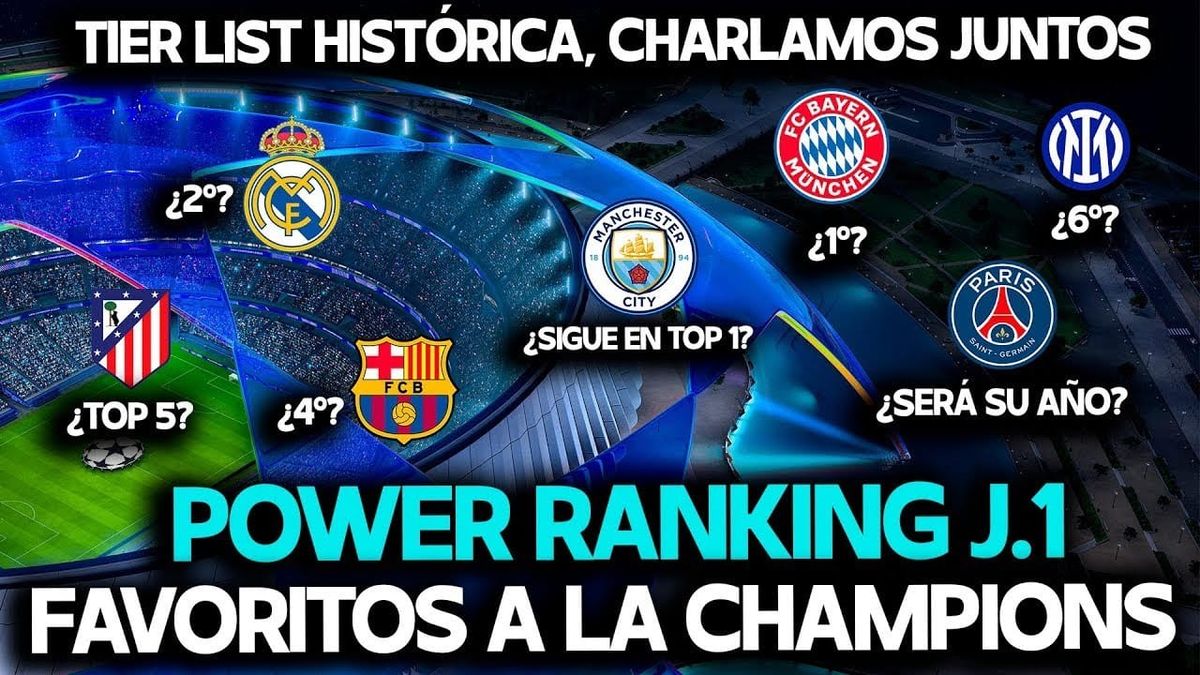
Joshua Kimmich's return to his natural midfield position appears to be the most decisive tactical factor in Bayern Munich's strong start to the season. The team has amassed devastating results—six goals against Holstein Kiel, five against Werder Bremen, and nine against Dinamo Zagreb—establishing themselves as Europe's top-performing side early on. Kimmich's clean ball distribution from that position, coupled with Michael Olise's emerging potential as an elite winger, complete a picture that several analysts place among the continent's top teams. Meanwhile, Luis Enrique's PSG is solidifying its position as a potential semi-finalist after a dominant first half against Girona, with players like Dembélé, Barcola, and João Neves acting as crucial components of a system built on constant movement.
Ultimately, what this analysis reveals is the fragility of any European hierarchy established in the early stages of the season. Bayern has accumulated statistical evidence against second-tier opponents, and the only remaining structural question is whether Vincent Kompany possesses the necessary managerial authority to maintain cohesion within a dressing room of strong personalities when results become challenging. PSG, on the other hand, has spent years building a collective identity at the expense of an individual star gallery: their tactical solidity, rather than individual names, gives them credibility as a genuine contender.
"Bayern Munich is currently the most in-form team in Europe."
Flick's Barcelona Sparks European Debate Over High Defensive Line and Squad Depth
Barcelona leads LaLiga with football that combines in-form youngsters, the resurgence of Lewandowski, and the emergence of figures like Lamine Yamal and Raphinha. However, their true Champions League candidacy clashes with squad depth that analysts place behind Real Madrid, Manchester City, and Bayern Munich. Hansi Flick's tactical approach—a very high defensive line and sustained high pressing—works with surgical precision in LaLiga, but raises questions about its viability against opponents with greater attacking intensity. The match against Bayern in the league phase is highlighted as the true test of how far this team can go.
There's a structural tension in Barcelona's project that this debate clearly reveals: Flick's style allows for no middle ground or conservative game management, turning every match into a test of collective resilience. The fundamental question isn't whether Barcelona can reach the semi-finals—several analysts believe they can—but whether they will know how to manage a lead when they have one, something that, under the model of permanent pressing, demands a level of tactical maturity this team has yet to demonstrate in Europe.
"If I were a Barça fan and they didn't reach the semi-finals, I would be disappointed."
Manchester City and Real Madrid Divide Opinion as Champions League Favorites with Unresolved Arguments
Manchester City tops the European power ranking for most analysts, backed by a squad that combines collective hierarchy with individual talents like Erling Haaland—ten league goals—and Kevin De Bruyne, whose return is highlighted as decisive when recalling the goal that eliminated Madrid at the Etihad. However, the second half of the draw against Arsenal—with City's possession nearing ninety percent without breaking down the opponent's block—illustrates a recurring trend: more and more teams have learned to compete by defending deep and disciplined. Real Madrid, without Toni Kroos and with their attacking players still not fully synchronized, emerges as a plausible alternative simply due to the accumulation of decisive players.
The City-Madrid discussion is not just a classification exercise but a reflection of a transformation in the European balance of power. That the debate is genuinely insoluble—several analysts admit seeing it as fifty-fifty—indicates that Pep Guardiola's tactical hegemony coexists with a real competitive fragility when opponents forgo contesting possession. Madrid, in contrast, builds its argument on a recent history in direct knockout ties that City, for all its superiority in play, has failed to sustain when it matters most.
"Watching Manchester City play is insane, but I believe Madrid will ultimately prevail due to their squad."
Also mentioned in this video
- Se comenta la lesión de Ter Stegen y el impacto en el FC Barcelona, así como el… (2:10)
- Los presentadores discuten la situación del Barcelona tras la lesión de Ter… (3:50)
- Se inicia un Power Ranking de la Champions League, colocando al Arsenal entre… (5:30)
- Se discute el nivel actual del Arsenal, si está en el top 5 mundial y si David… (7:55)
- El Atlético de Madrid es colocado entre las posiciones 7 y 8 en el Power… (9:51)
- Se continúa el Power Ranking de la Champions League, colocando al Inter de… (23:05)
- Se debate sobre la posición de la Juventus en el Power Ranking, colocándola en… (26:29)
- Se analiza el impacto de la ausencia de Kroos en el Real Madrid y su capacidad… (34:25)
- Se abre un espacio para preguntas y respuestas de los miembros, donde se aborda… (51:42)
Summarised from Mundo Maldini · 1:00:20. All credit belongs to the original creators. Streamed.News summarises publicly available video content.