🌐 Also available in: Español
Original source: Mundo Maldini
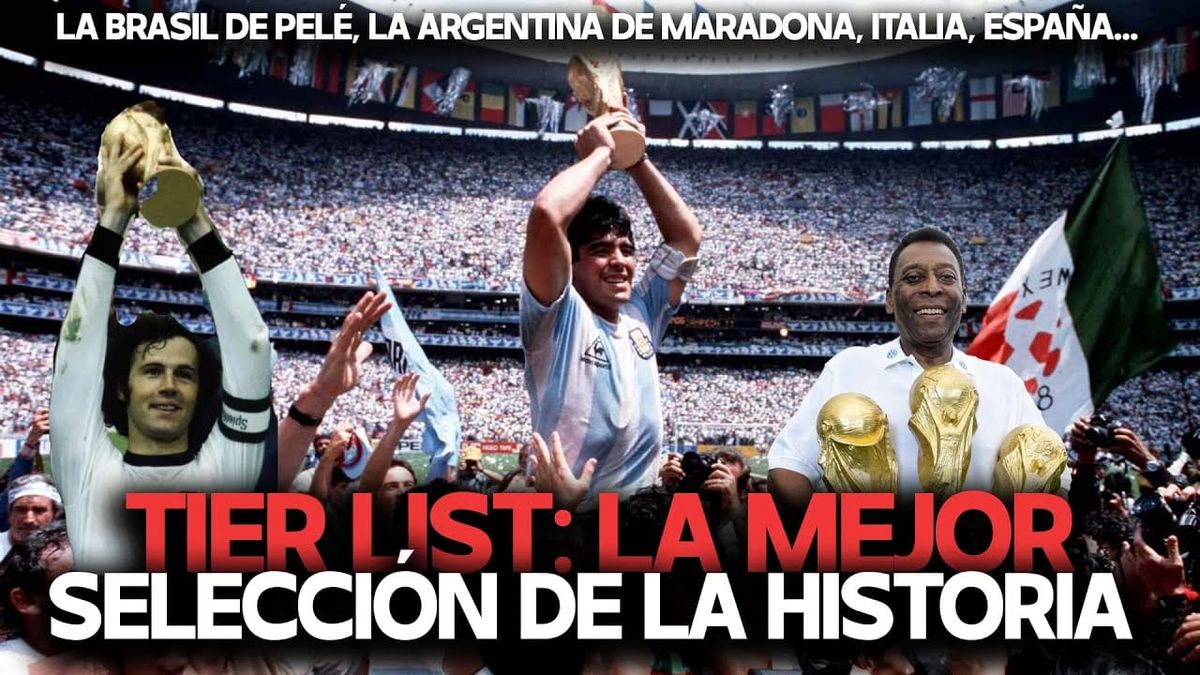
This video from Mundo Maldini covered a lot of ground. 6 segments stood out as worth your time. Everything below links directly to the timestamp in the original video.
The match that paralyzed the Maracanã in 1950 remains the ultimate reference for unpredictability in football. The story of how it came to be played—with England conceding to a call from their own queen—adds a political dimension that is rarely told.
The Maracanazo of 1950: The Greatest Upset in World Cup History Remains Unrivaled
Uruguay's victory over Brazil at the Maracanã in 1950 remains, according to this analysis, the greatest feat in World Cup history. The match was not a conventional final—the tournament was decided by a quadrangular league—meaning Brazil only needed a draw to be crowned champions. Uruguay, who fell behind to a goal from Friaça, mounted a comeback with the two historic goals from Schiaffino and Ghiggia. Reinforcing the weight of the narrative is a personal interview with Alcides Ghiggia himself, author of the 2-1 winning goal, conducted shortly before his death, in which he described the subsequent celebration through the streets of Rio de Janeiro. That same tournament had begun with England's humiliation, losing 1-0 to a team of amateur American players; the BBC, upon receiving the telegram with the result, responded by asking if it wasn't a mistake and if the score was actually 10-1.
"Uruguay hasn't won another World Cup since, but that one counts for many."
Brazil 1970 and the 1974 World Cup: The Exact Moment Modern Football Was Born
Brazil 1970 represents, in this analysis, the most emblematic team in football history for a structural reason: it chose to forgo a central striker to field five attacking midfielders—Pelé, Gérson, Tostão, Jairzinho, and Rivellino, each from a different club—and the result was an unparalleled spectacle. Jairzinho scored in every match of the tournament, a feat unmatched by anyone since. Their third title win granted them permanent possession of the Jules Rimet Trophy, which was later stolen and believed to have been melted down. However, the analysis points out that the true historical turning point was not 1970 but the 1974 World Cup: from that year on—and influenced by Ajax and Johan Cruyff's Netherlands in the preceding years—European football became more physical and tactical, leaving South American teams structurally behind. The Netherlands prevented Uruguay from crossing the midfield in their entire match, and thrashed Argentina 4-0.
"If we can pinpoint a moment when football transitioned from old to modern, it's the 1974 World Cup."
England's Only Title in 1966: Amidst Referee Controversy, a Ghost Goal, and a Dog That Saved the Jules Rimet Trophy
The 1966 World Cup, which England won at home, is categorized as 'historic' but not necessarily as a display of footballing superiority. The tournament was marked by refereeing controversies that favored European teams over South American ones: the sending off of Rattín in the Argentina-England quarter-final—at a time when cards didn't even exist—and similar incidents in the Uruguay-Germany match on the same day. The final was decided by a Geoff Hurst goal in extra time, the validity of which remains debated, and ended with fans on the field, leading to the historic line from commentator Kenneth Wolstenholme: 'They think it's all over… it is now.' Months before the tournament, the Jules Rimet Trophy had been stolen; it was found buried in a garden by a dog named Pickles, who thus became the most famous animal in football history.
"They think it's all over… it is now."
Argentina 1986: Maradona Transforms an Average Team into World Champions
Argentina's 1986 team occupies a category of its own in World Cup history, not for the collective quality of its squad—it is argued here that the 1978 team was, as a whole, superior—but for the individual brilliance of Diego Maradona, who elevated a team with no margin for error to glory. The final against Germany encapsulated this logic: Argentina led 2-0, conceded two goals from set pieces—exactly the scenario Carlos Bilardo had warned his players about—and it was Maradona who, from the center-kick after the 2-2 equalizer, mentally orchestrated the comeback and provided the decisive pass to Jorge Burruchaga for the 3-2 winner. The episode reveals the internal temperature of that dressing room: as Jorge Valdano himself recounted, ten minutes after winning the World Cup, Bilardo still wore a sour expression, admonishing his players for the two goals conceded from corners.
"If Maradona had been Algerian, Algeria would have won the World Cup. I'm serious."
Italy 1982 and the Sarrià Match: How Paolo Rossi Rose to Win a World Cup
The Italian national team of 1982 arrived at the decisive second-round match with a record that invited skepticism: three draws in the first phase, only one goal scored—by Conti—and qualification miraculously secured in a group played in Galicia against Cameroon, Poland, and Peru. What happened at the Sarrià Stadium against Brazil, however, reconfigured the tournament. Brazil, who had thrashed reigning world champions Argentina 3-1 in the group stage, only needed a draw to advance. Paolo Rossi, who had not scored in any previous match, netted a hat-trick; Brazil equalized twice but could not achieve a 3-3 draw, partly because—as the analysis argues—their offensive DNA prevented them from retreating when they had the lead. Rossi continued scoring against Poland and in the final, finishing as the tournament's top scorer.
The Miracle of Bern in 1954: Germany Wins Its First Title Six Years After World War II Defeat
The 1954 World Cup, held in Switzerland, has a dimension that transcends sport: it was the first time the German anthem resonated strongly in the world since their defeat in World War II, and this symbolic weight permeates the evaluation of that title. The heavy favorite was Hungary, who had beaten Germany 7-3 in the group stage and arrived at the final having also defeated England 6-3 at Wembley and 7-1 in Budapest in previous friendlies. Puskás entered the final injured, and Germany, who started 2-0 down, ultimately came back to win 3-2 in what became known as the Miracle of Bern. What makes this result structurally significant is Germany's status as an excluded nation: its return to the global stage through a sports title had a political and cultural resonance that no other championship of that decade can match.
Also mentioned in this video
- El concepto de la tier list de selecciones campeonas del mundo, aclarando que… (2:03)
- Se inicia la tier list posicionando a la selección de Uruguay de 1930 en la… (7:36)
- Se evalúa a la Italia de 1934 y 1938, colocándolas en la categoría de 'menos… (9:02)
- Se analiza la Brasil de 1958, el nacimiento de Pelé en los mundiales, y la de… (20:06)
- Se analiza a la Alemania de 1974, destacando su papel en el inicio del fútbol… (36:06)
- La evolución de la selección brasileña post-Pelé en esa época, clasificando a… (39:07)
- Se evalúa la Alemania de 1990 y su victoria en un mundial de bajo nivel… (52:21)
- Se analiza la Francia de 1998, su primera victoria mundial, el rol de Zidane y… (55:55)
- Los presentadores discuten sobre la grandeza de Maradona y Messi, admitiendo… (1:00:00)
- Se clasifica a la Brasil de 2002, destacando la recuperación de Ronaldo y su… (1:03:00)
- Se narra la experiencia del presentador en el Mundial de Sudáfrica 2010, la… (1:06:05)
- Se discute la Francia de 2018, valorando su superioridad pero posicionándola en… (1:13:59)
Summarised from Mundo Maldini · 1:20:45. All credit belongs to the original creators. Streamed.News summarises publicly available video content.